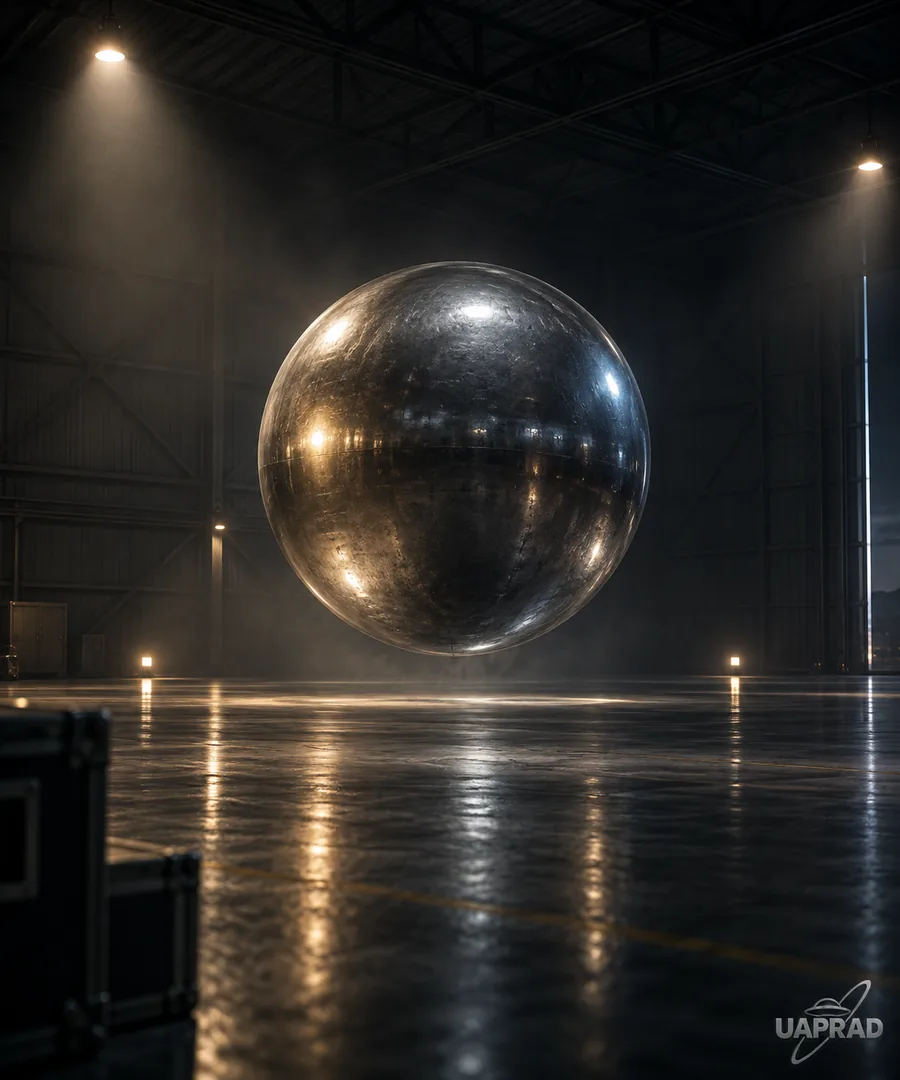
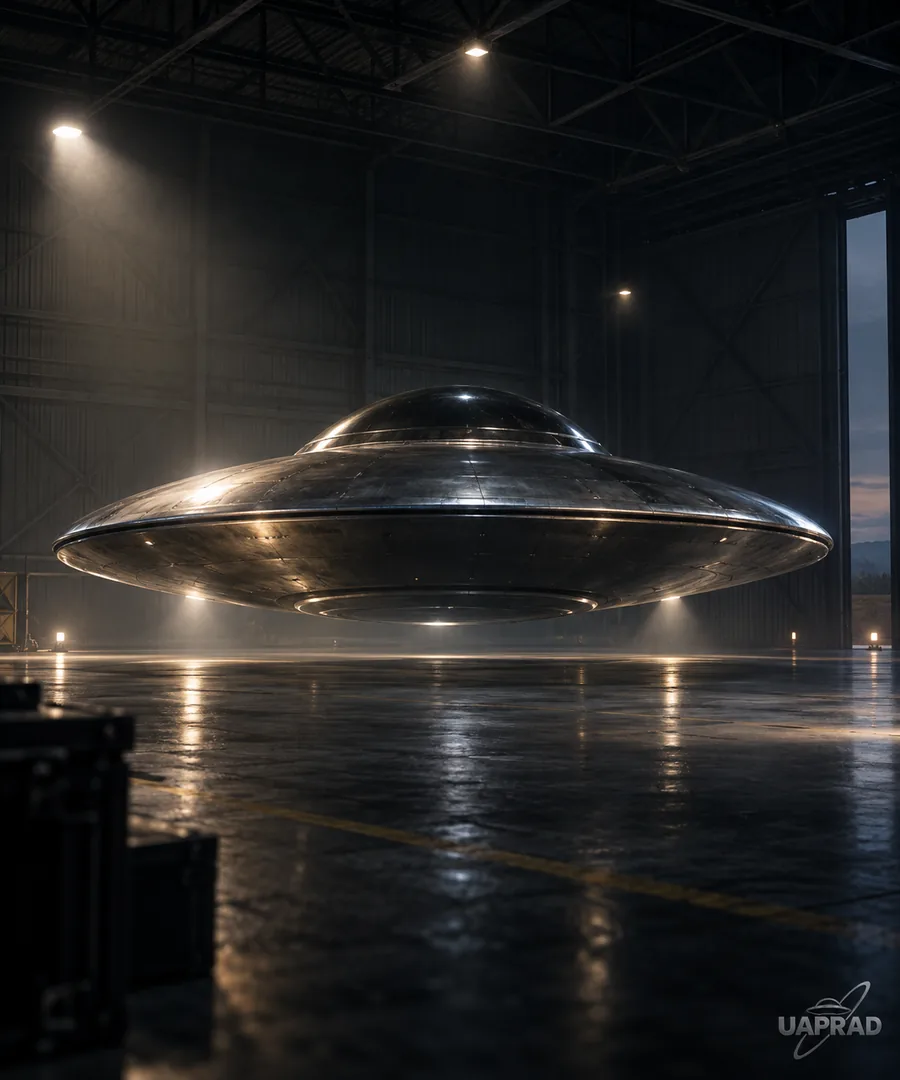
Ring-like reports are sparse in the current archive. Some describe an annular object, while others may result from defocus, diffraction, atmospheric effects or the way a camera records a bright light.
Rings and nested circles
A ring is an annular appearance in a projection. A torus is a three-dimensional form with a central opening. Moving from the first description to the second requires evidence about depth and the boundary of the opening. A dark centre in an image can be informative without resolving that physical topology.
The Ministry of Defence entries cover a ring apparently eclipsing the Moon, nested circles and a ring with a tail. They preserve related vocabulary but different geometries. A circular object surrounded by a ring also differs from an object whose entire body is annular. Those descriptions should remain separate within the catalogue. UK Ministry of Defence UFO Report 2001
Central openings and image boundaries
The Cheshire account offers a possible geometrical relationship with the Moon, but the short log entry leaves the alignment and observer’s exact meaning uncertain. It cannot determine whether the reported ring had a physical opening. The 2001 summaries likewise lack the sequence or angular measurements needed to reconstruct structure.
For camera observations, focus and the optical response need examination before a dark centre is assigned to the source. Comparison recordings of known lights through the same equipment can establish whether the instrument produces a similar annular image. Such a result addresses image formation without necessarily identifying the original target.
Two-dimensional and physical interpretations
A physical-ring hypothesis predicts a stable opening whose appearance changes consistently with viewing angle. An image-effect hypothesis predicts changes related to focus or other recording conditions. These are discriminating predictions, but the selected log entries provide too little detail to test them retrospectively.
The appropriate conclusion is therefore about the reporting record: ring language exists, while evidence of a toroidal body remains limited. Expanding the category through every circle-within-a-circle image would combine different mechanisms and conceal the very uncertainty that requires investigation.
Report catalogue
Selected records describe reported appearances. Cross-listing one event under several forms adds no independent observation.
2000 · United Kingdom
UK Ministry of Defence UFO Report 2000
A Cheshire entry dated 9 January describes a ring-shaped object eclipsing the Moon. It provides no distance, identifying detail or evidence of a hollow body.
The log records a circular object with a ring at Whitchurch on 28 February, nested rings at Humberside on 20 May, a horizontal ring with a tail at Buxton on 14 August and a circle within a circle at Abbotskerswell on 17 August. None includes enough detail to determine whether the source was annular.
The reporting record contains annular and nested-circle descriptions, but the selected entries do not resolve a physical opening. Rings around objects, ring-like objects and image features with dark centres pose different geometrical questions. Grouping their vocabulary is useful only while those distinctions remain visible.
Source recovery should preserve the relationship between the reported ring and its surroundings. A ring seen against the Moon raises questions about alignment and occlusion; nested circles raise questions about which boundary belongs to the target. Neither can be settled by counting the shared word. A sequence showing the central region transmitting the background while the outer boundary changed with aspect would constrain a physical-opening interpretation more closely than a single annular impression. Until comparable observations are available, the selected entries cannot support a common topology.
A toroidal-body interpretation requires depth and continuity information absent from the brief logs. Optical comparison could explain a recorded ring in a future camera case, while the historical accounts require their underlying statements. The current evidence supports ring-like appearance as a descriptive category with a limited basis for three-dimensional interpretation.
Research gaps
The underlying statement and sketch for the Cheshire Moon-alignment report.
Original media and comparison recordings distinguishing an annular image from a physical opening.
Cases and witnesses
Case deep dives
The report catalogue provides the available case material for this form.
Witness deep dives
The cited records identify the witnesses and the limits of the available testimony.
Public record
Official material, where available, is linked in the source library.
Source library
The tiers describe each source’s relationship to the record. Direct testimony can remain uncorroborated, and an official document can preserve a claim without verifying its physical interpretation.